The useful future is many models, not one
Drafting, extracting, and revising ask for different strengths. Put the right model on each step and keep the workflow as one ActionFlow.
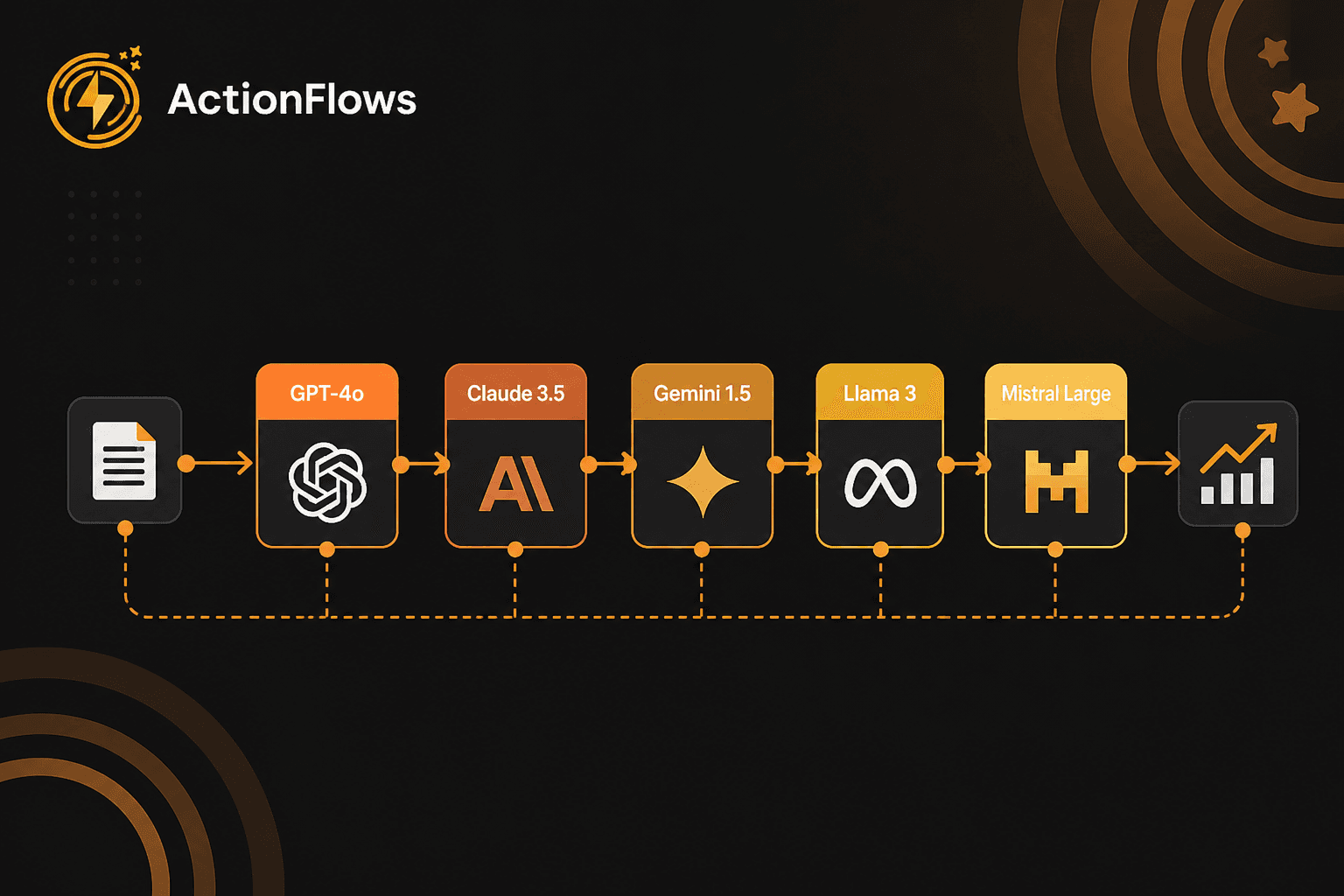
Match the model to the step
A new best model announcement is less useful for product work than it looks. Most jobs have stages. Drafting, extracting, and revising are different jobs. One model on every stage is usually the wrong tool on at least one of them.
Specialization beats a single default
Some models are better at long reasoning. Others are cheaper and fast enough for routine transforms. Others are steadier at structured output. The work is matching the model to the step, not winning a benchmark argument in Slack.
That matching is painful if every step lives in a different tab with a different prompt history.
Several models, one ActionFlow
ActionFlows lets you put those models on one canvas. Each node can use the model that fits that stage. The process still runs as one ActionFlow, with one trail. You can replace a model later without rebuilding the path.
What this changes for teams
The debate moves from which single model is best to whether the system holds together. You still care about quality. You also care whether step three can read step two, and whether the last node writes into a tool people already use.
- Give hard reasoning to a stronger model.
- Give routine transforms to a faster one.
- Land the finished output in the tools the team already has.
The useful future is not one model that swallows the company. It is several models on a path you can inspect. That is the bet ActionFlows is built around.
Start building AI workflows
Create a free account, open a template or a blank canvas, and run your first ActionFlow.
Get product updates
New nodes, agents, and product notes. We send mail only when we have something worth opening.