Recurring spend grows because nobody owns the total
People buy subscriptions one at a time and never look at them as a group. Each subscription had a reason at the time. The total is a number nobody has seen.
Finding them all is not simple. Charges appear under merchant names that do not match the product. Annual renewals hide among monthly ones. The same tool sometimes appears twice under two departments.
Duplicate tools are the most common finding, and the most awkward. Two teams paying for competing products is not a financial error. It is an organizational fact. Finance is the function that can see it.
Finance cannot see usage. A charge proves a payment. It does not prove that anyone logged in. That is why the flag must be a question, not a conclusion.
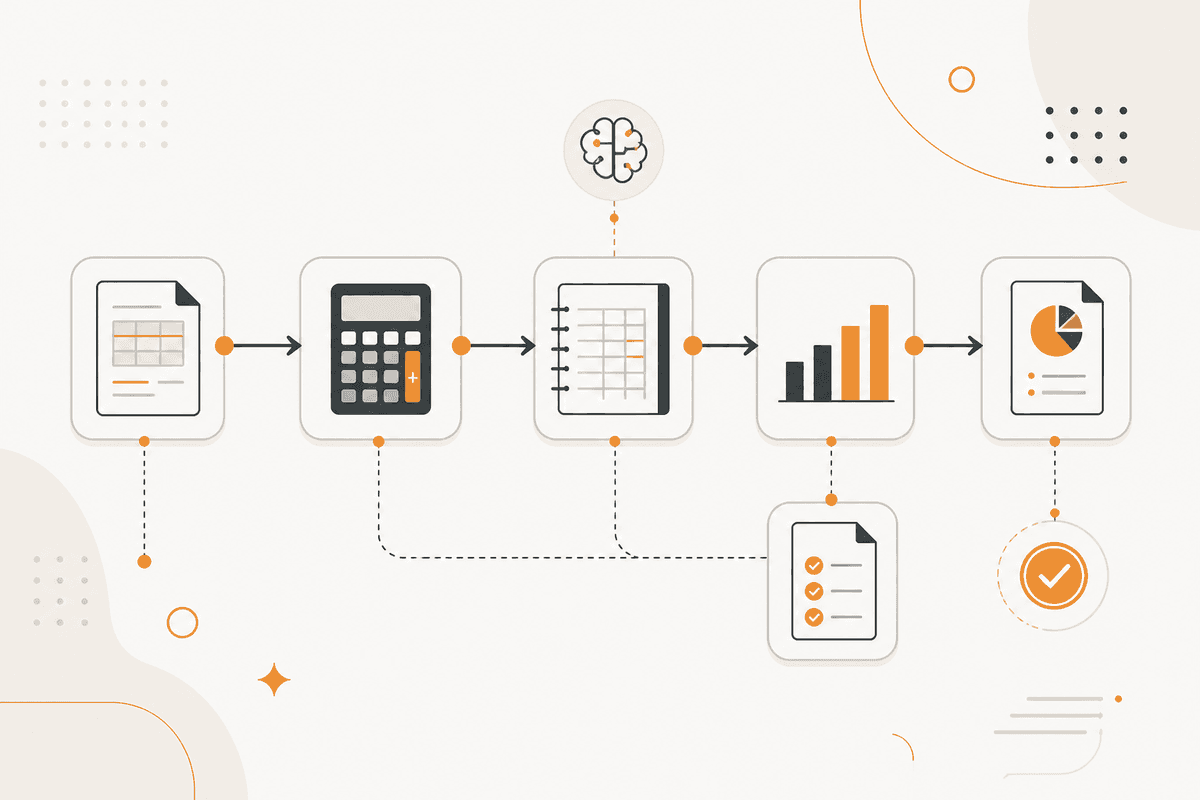
How the ActionFlow runs on the canvas
Recurring charges are identified from transaction history, not from a subscription list, because no subscription list is complete. A PostgreSQL or Google Sheets node reads the transactions. A Start Scheduled node runs the review.
A Generate Object node detects recurring patterns over the period and returns merchant name, cadence, amount, and likely product name. The last field turns an unreadable merchant string into something a person can act on.
A Uniq node consolidates the same product under different merchant identifiers. A Sort node orders by annual cost rather than charge amount, so a monthly charge is not ranked below an annual charge that has a lower face amount.
A Math node computes the annualized cost per line and the total.
A second Generate Object node groups products by function. Apparent duplicates, such as two tools that do the same job, are raised as a question for the owner. The node does not suggest cancellation.
A Google Sheets node records the breakdown. A Create Excel node produces a shareable version. A Slack node posts the total and the list of duplicates.
An Email or Resend node can ask each named owner whether the tool is still in use. That is the only way to close the usage gap.
Nodes this ActionFlow uses
- PostgreSQL (Data): reads transaction history, which is more complete than any subscription list.
- Generate Object (AI Core): identifies recurring patterns and the likely product behind each merchant string.
- Uniq (Control): consolidates one product appearing under several merchant names.
- Math (Util): annualizes each line so monthly and annual charges rank comparably.
- Sort (Data): orders by annual cost.
- Generate Object (AI Core): groups by function and raises apparent duplicates as a question.
- Create Excel (Data): produces the shareable breakdown.
- Resend (Communication): asks named owners to confirm whether a tool is still in use.
Frequently asked questions
Start building AI workflows
Create a free account, open a template or a blank canvas, and run your first ActionFlow.
Newsletter
Get product updates
New nodes, agents, and product notes. We send mail only when we have something worth opening.