The pattern is only visible across a year, and only safe in aggregate
If you look at attrition as a count of people who leave, you get one set of conclusions. If you look at a full year, you get another. The two often conflict, because the reasons people give usually do not match the reasons the pattern suggests.
The useful findings are the leading indicators: features you can observe before people leave, rather than explanations given afterward. To find them, you have to compare people who left with people who stayed, not only look at the exits.
That is where the danger sits. If you apply a leading indicator to an individual, you get a flight-risk score. If you assign a flight-risk score to a particular person, their treatment changes based on the prediction.
The reporting level is a fixed boundary, not a preference. The suppression threshold is set high so that the size of a small team cannot be inferred from the figures.
How the agent is built in Agent Studio
The system prompt sets the aggregation level and the minimum group size before any reporting occurs. It forbids any individual-level output, including statements that could be read as saying that a specific person is at risk of leaving.
Prompt skills hold organizational context: restructuring, the state of the market, and changes that happened in certain periods. Departures around a single event are read as caused by that event.
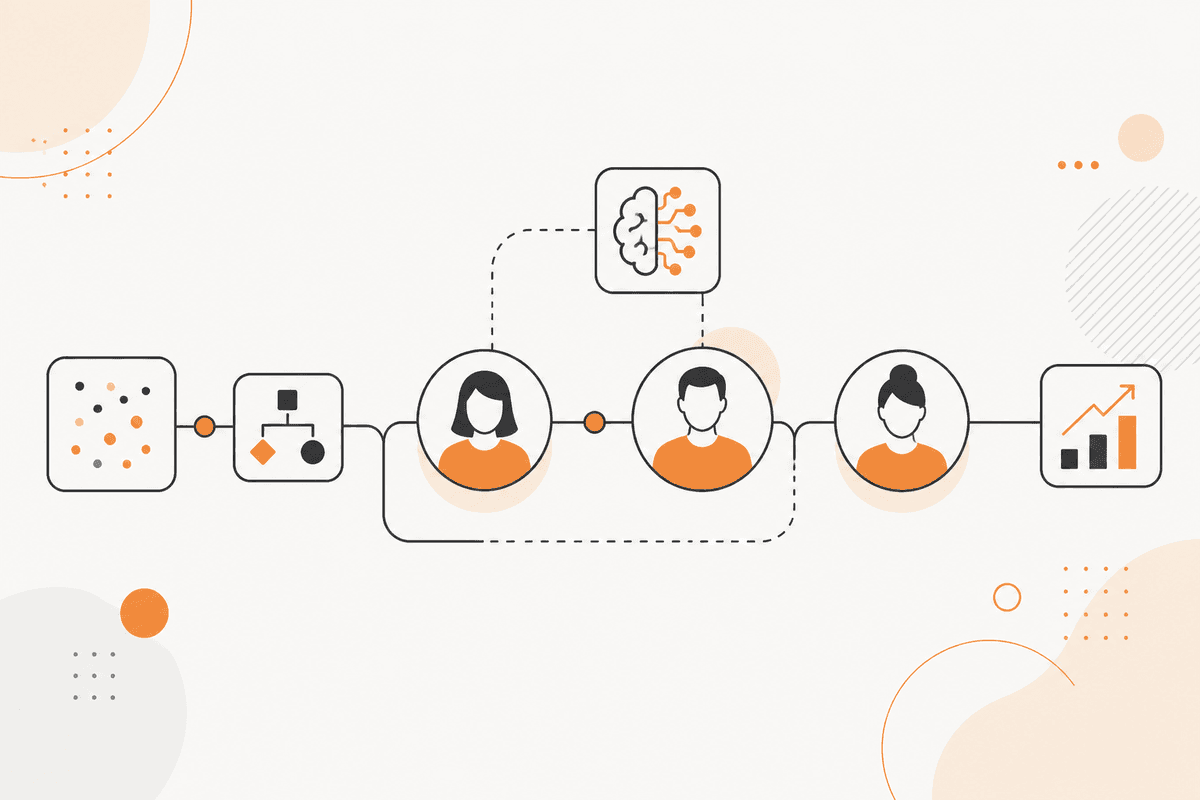
Anonymity is applied before the agent can read anything. A Filter node removes names, managers, and small-team identifiers. A Math node checks group sizes before the handover.
Agent Chat receives the anonymized dataset and returns the patterns with their counts, the candidate leading indicators at the population level, and what the sample does not support.
Notion receives the analysis. Slack sends the alert to the person in charge, not to the channel.
Comparing people who left with people who stayed is allowed and useful at the population level. It is not allowed for current employees. The prompt states this directly and does not leave the point to individual interpretation.
What this agent is built from
- System prompt: aggregation level, minimum group size, and no individual-level output in any form.
- Prompt skills: organizational context, so a cluster around one event is read as that event.
- Filter (Data): strips names, managers, and small-team identifiers before the agent sees anything.
- Math (Util): verifies group sizes ahead of the handover.
- Agent Chat (Util): receives only the anonymized set.
- Notion (Integration): receives patterns, population-level indicators, and what the sample cannot support.
- When an ActionFlow is enough: If you only need a per-period attrition rate, build the workflow. That rate carries none of this risk. The agent is for the pattern, in aggregate only.
Frequently asked questions
Start building AI workflows
Create a free account, open a template or a blank canvas, and run your first ActionFlow.
Newsletter
Get product updates
New nodes, agents, and product notes. We send mail only when we have something worth opening.