Most problems diagnosed as training needs are not training needs
When the same problem keeps occurring, people usually reach for training first. Training is already in the budget, and it looks like action.
It is often the wrong solution as well. If a problem keeps recurring because of a confusing tool, an unclear procedure, or an unrealistic workload, the problem continues no matter how much training you give. The training is then treated as evidence that the people are the problem.
You have to look at the pattern to tell the two situations apart. If one person has difficulty and others do not, that is one case. If everyone has difficulty, that is another, and that second case is rarely a training gap.
Aggregate is the right level for the same reason as in the rest of this category. When a finding is about a team, it is a capability discussion. When the same finding is attached to a person's name, it is a performance judgment generated by software.
How the agent is built in Agent Studio
For every recurring problem the system prompt lists four possible causes: a skill gap, a process gap, a tooling gap, or a capacity gap. The agent must weigh all four rather than taking the first plausible one.
The system prompt also fixes the reporting level at the team or function level, with no individual attribution.
Prompt skills hold your capability framework and current training material, so any recommendation either points to something that actually exists or states plainly that nothing does.
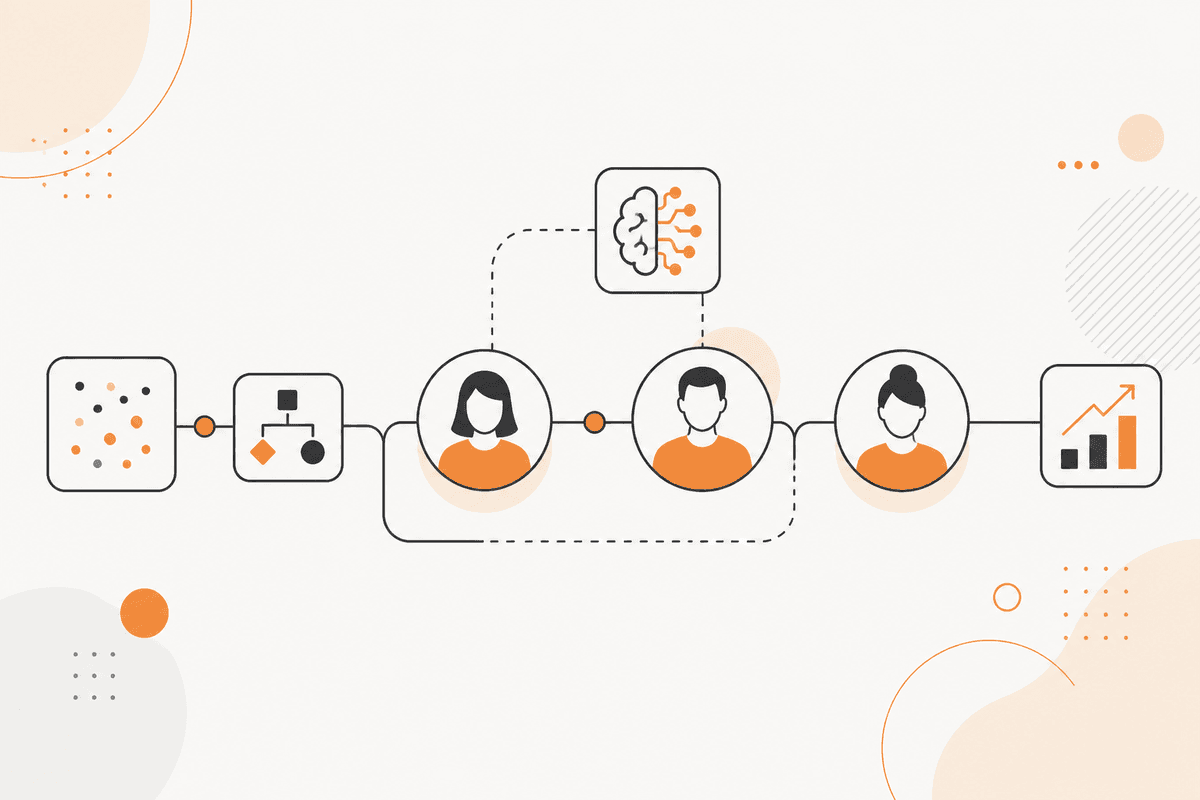
The flow supplies evidence rather than opinions: a Jira or Linear node for recurring issue types, an HTTP Request node for quality or error data, and a Google Sheets node for completed training history.
Agent Chat requests the diagnosis. Notion compiles the findings, the identified cause, and the supporting evidence, and includes a separate section listing the problems the agent does not treat as training issues.
The more valuable part is this: when a people team says "this is a tooling problem" and backs it with evidence, you do not spend money on training that would not have worked.
What this agent is built from
- System prompt: four candidate causes are weighed for every recurring problem, not the first plausible one.
- System prompt: reporting at the team or function level, excluding individual attribution.
- Prompt skills: your capability framework and the training catalog that actually exists.
- Linear (Integration): supplies recurring issue types as evidence. Jira fits the same slot.
- Agent Chat (Util): requests a diagnosis based on the assembled evidence.
- Notion (Integration): receives findings plus a section of problems that are not training issues.
- When an ActionFlow is enough: If you only need to track completion against a required curriculum, build the workflow. Diagnosing whether training is the right answer is the agent's work.
Frequently asked questions
Start building AI workflows
Create a free account, open a template or a blank canvas, and run your first ActionFlow.
Newsletter
Get product updates
New nodes, agents, and product notes. We send mail only when we have something worth opening.