Forms cannot ask the obvious follow-up
Intake forms ask everything of every person. That makes the process long for the patient and still incomplete. If someone makes a relevant point in the free-text box, the form has no way to ask the obvious follow-up question.
Conversations adjust. That adaptability makes the intake both shorter and more thorough. If a question does not apply, it is omitted. If a detail is mentioned, it is pursued while the person is still present.
The clinical boundary cannot be altered. Gathering information that the patient has already stated is an administrative task. Posing questions that lead toward an assessment is not. The transition between the two is gradual, so it is easy to see.
The need for speed is also a boundary. If a patient states that they require immediate attention, that statement must be relayed to the appropriate person immediately. The conversation should not continue to the next topic.
How the agent is built in Agent Studio
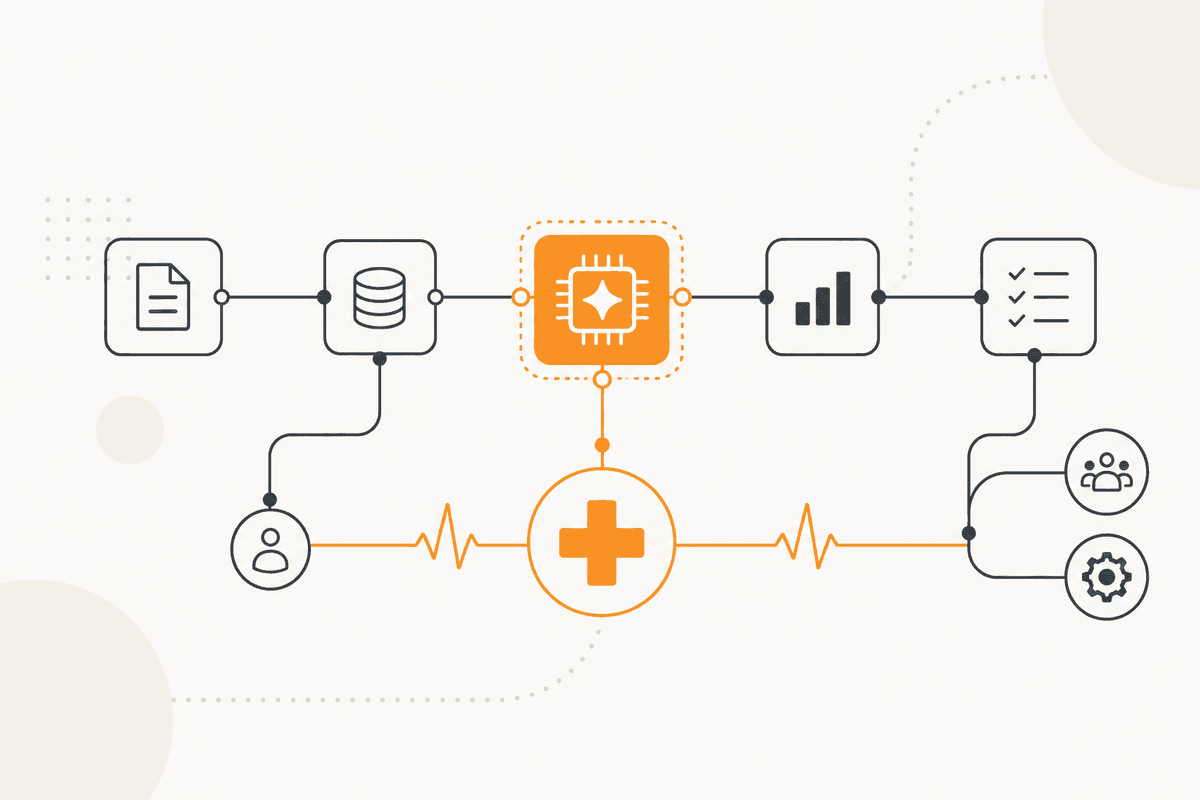
The system prompt states escalation before any reference to data collection. The situations and phrases that end the conversation and reach a person immediately are set out as rules, not as judgment calls.
The prompt then limits collection to administrative information: identifiers, contact details, coverage, the patient's stated history, and their access needs. It prevents any question that aims to assess anything.
Your prompt skills hold the way you phrase intake questions and the plain-language wording your patients respond to, because people answer more effectively when they know the reason for each question.
Make it clear at the start that this is an automated intake assistant, that a person is available, and that the conversation may be ended at any time.
Sessions last a long time, so the patient can take a break and come back without having to start over.
The HTTP Request node records the collected fields. Each open-text answer is quoted rather than normalized.
A Slack node informs the clinical team. Any information the agent is unable to collect is shown as outstanding rather than left blank.
What this agent is built from
- System prompt: escalation rules stated first, ending the conversation and reaching a person immediately.
- System prompt: administrative collection only. No questions that probe toward assessment.
- Disclosure: automated assistant identified at the start, with a person always available.
- Prompt skills: your intake fields, plain-language wording, and why each item is asked.
- Durable sessions: a patient can pause and return without having to repeat themselves.
- HTTP Request (Util): writes collected fields with free text quoted rather than normalized.
- When an ActionFlow is enough: If a well-designed form with conditional fields is enough, build the workflow. It carries none of this risk.
Frequently asked questions
Start building AI workflows
Create a free account, open a template or a blank canvas, and run your first ActionFlow.
Newsletter
Get product updates
New nodes, agents, and product notes. We send mail only when we have something worth opening.