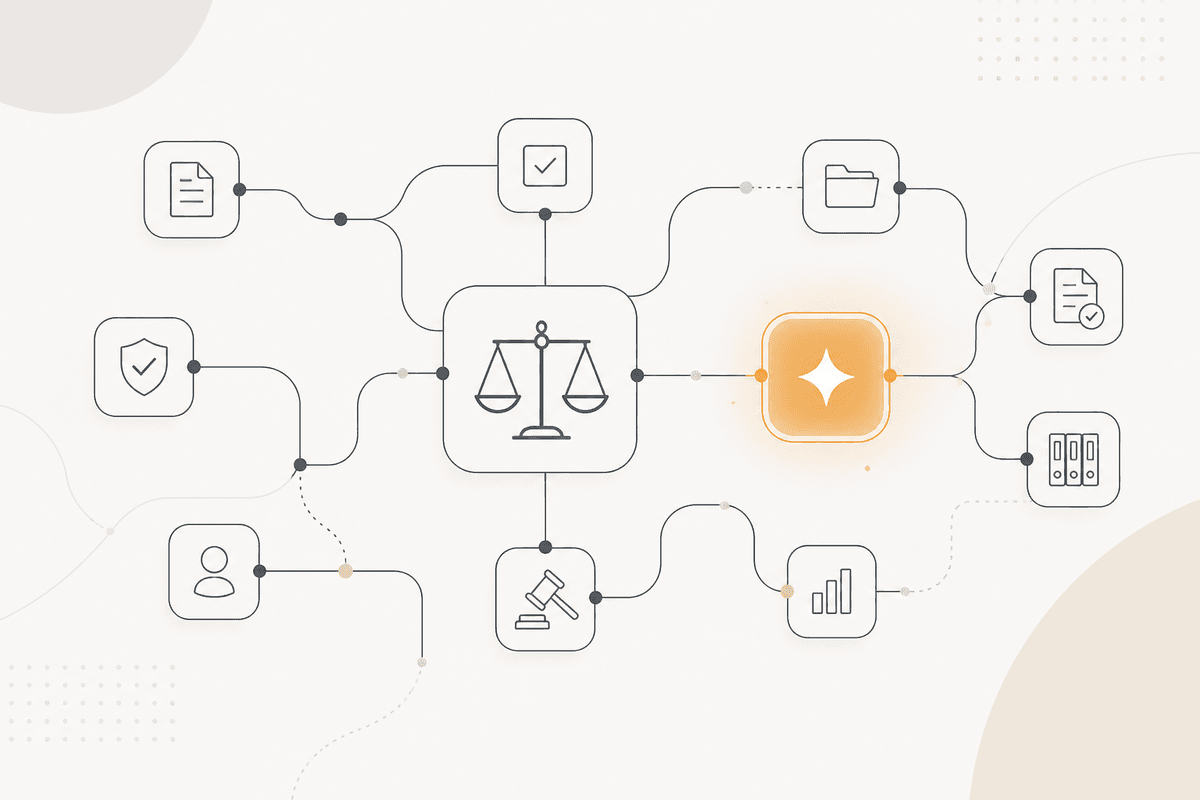
Near a boundary is the answer that matters most.
Classification questions often arise when a business ships across borders, and in most cases the same answer given before for a similar question applies. Dealing with them one by one takes a great deal of specialist time.
The cases that are not repetitions are those near a threshold: a specification just below a control parameter, a destination with conditions attached, or an end use that changes the analysis.
The consequences of getting it wrong are not commercial. That is why automated classification is preparation rather than determination, and why "near a boundary" must be an output the system generates rather than a state a person observes.
The reference data is yours and has a date. Control lists, destination conditions, and the list of restricted parties change. A classification based on out-of-date reference data looks complete but is not.
How the agent is built in Agent Studio
The reference data is stored in an Airtable or PostgreSQL node, maintained by your specialists, with each entry including a date. The system prompt asks the agent to include the reference date with any output.
The prompt is more restrictive here than anywhere else in this category. The agent produces a file based on your reference data and provides a suggested classification with its reasoning. It does not determine, authorize, or clear anything, and it states this on each output.
If anything falls within a margin you have set around a control parameter, it is referred to a specialist, no matter which side of the margin it is on.
Restricted-party screening stays a separate, deterministic step that checks against the current lists. The agent does not decide it.
Prompt skills include the product specifications and the previous classification decisions, so repetition can be both quick and consistent.
Agent Chat returns the prepared file. Notion keeps it. Slack sends any item that is close to a boundary, involves a new destination, or has an unusual end use to your specialist.
The agent's output alone will not result in anything being shipped.
What this agent is built from
- Airtable (Integration): holds dated reference data maintained by your specialists.
- System prompt: prepares and proposes only. Never determines, authorizes, or clears, and states the reference date.
- System prompt: flags anything within a defined margin of a control parameter, either side.
- Deterministic screening: keeps restricted party checks as a flow step against current lists, not a judgment.
- Prompt skills: hold product specifications and prior classification decisions for consistency.
- Slack (Communication): routes boundary cases, new destinations, and unusual end uses to a specialist.
- When an ActionFlow is enough: If you are matching a known product to its recorded classification, build the workflow. That handles the repetition.
Frequently asked questions
Start building AI workflows
Create a free account, open a template or a blank canvas, and run your first ActionFlow.
Newsletter
Get product updates
New nodes, agents, and product notes. We send mail only when we have something worth opening.