Research effort should match deal size, and only a judgment can match it live
The salesperson receives the same generic set of fields for a $100 signup and for a six-figure opportunity, even though the research is too much in one case and not enough in the other.
You decide how far to go as you read. After two sources, it is usually clear whether the person evaluating the tool is a single developer or a member of a platform team with a budget. You then know whether to fetch a third source.
The second judgment is subtraction. A representative has 90 seconds to pick three facts from the 20 fields they go past, and they can choose those facts only if they know what to do with them.
The two judgments disappear as soon as all the leads look the same. That is when a flow is the better solution.
How the agent is built in Agent Studio
The judgment here is how much research to do. The system prompt names the segments you cover, the signals that distinguish them, how much effort to spend on each, and permission to stop after one source if the lead is insignificant.
Prompt skills carry the note format and the standing instruction that separates fact from inference. If a representative repeats an inferred headcount on a call and is then corrected, they lose more than the research gained.
MCP connections and built-in tools enable retrieval. Put a strict limit on fetches per lead in the system prompt, because an agent with no budget spends that budget on the leads that deserve it least.
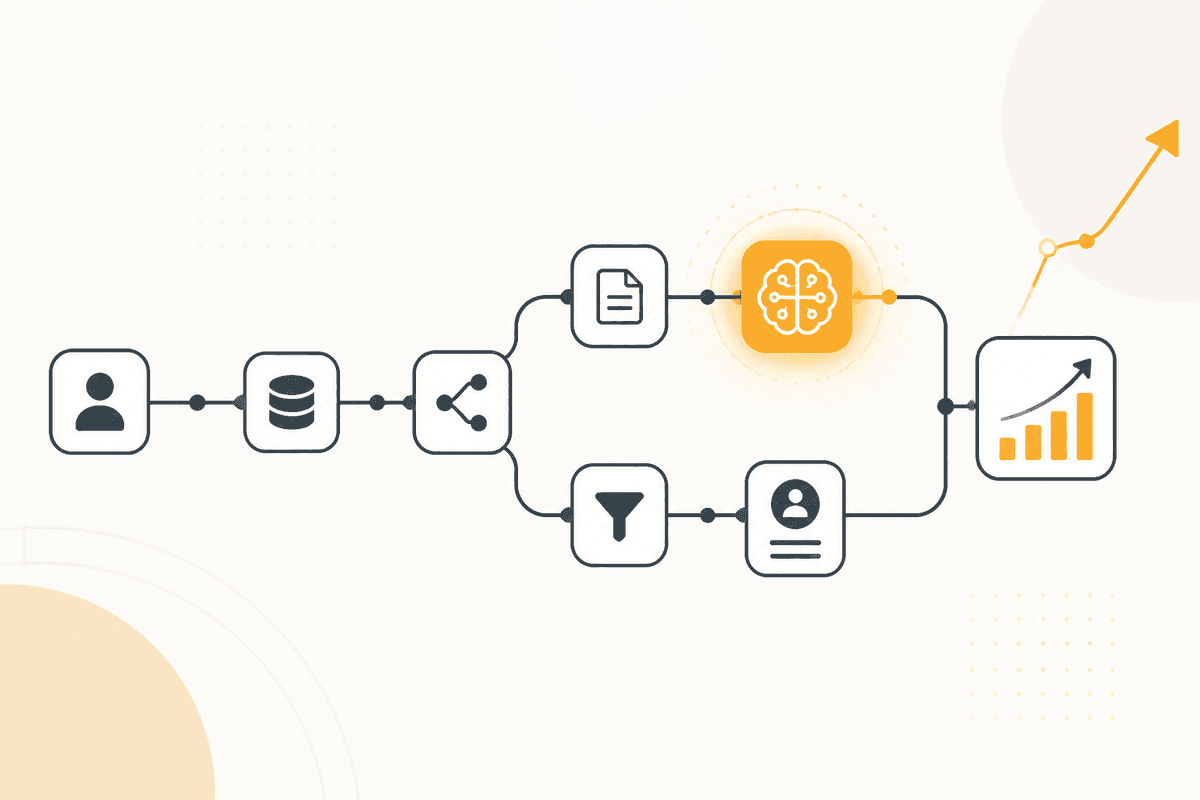
In practice, an ActionFlow runs this process. When a Webhook trigger fires on the form, the Agent Chat node passes the lead to the agent. The response goes to Slack for the sales representative, and to Google Sheets with the number of sources consulted, so you can check whether the depth judgment matches the results.
Because sessions last, a representative can ask a question about a lead and still get an answer that keeps the research in context, rather than starting again.
What this agent is built from
- System prompt: your segments, the signals that distinguish them, and permission to stop early.
- Prompt skills: the note format and the rule that separates fact from inference.
- MCP connections: retrieval, bounded by a ceiling on fetches per lead.
- Agent Chat (Util): a Webhook-triggered flow hands each new lead over automatically.
- Slack (Communication): delivers the note where the rep already works.
- Google Sheets (Integration): logs sources consumed per lead, so the depth judgment is measurable.
- When an ActionFlow is enough: If every lead comes from one segment and needs the same three fields, a workflow is faster and costs less.
Frequently asked questions
Start building AI workflows
Create a free account, open a template or a blank canvas, and run your first ActionFlow.
Newsletter
Get product updates
New nodes, agents, and product notes. We send mail only when we have something worth opening.