Frequency is a weak proxy for importance
Survey analysis optimizes for counting, and counting rewards what is easy to say. The complaint everyone can articulate ranks above the complaint that only three people could describe. The second is often the more serious finding.
Grouping is where the analysis is won or lost. Answers describing the same problem in unrelated vocabulary belong together. Any approach that matches on words will split them.
Some answers are genuinely unique and genuinely important. A response describing a failure nobody else hit can be the most valuable sentence in the dataset. A process that ranks by count will not surface it.
Segment matters too. A theme that customers constantly raise, and that you are moving away from, is real and should not drive the roadmap. The count alone cannot tell you that.
How the agent is built in Agent Studio
Clustering happens by reading rather than by vector distance, because the platform has no embedding node. That is a real difference in behavior, and it favors this use case. A group formed by reading can explain why those answers belong together, and that explanation is what a stakeholder challenges when they disagree with a theme.
The system prompt requires a reason for each group, a segment attribution for each finding, and a separate section for responses it deems important despite their low frequency.
Prompt skills carry your segment definitions and the themes you already know about, so the report distinguishes new findings from confirmations.
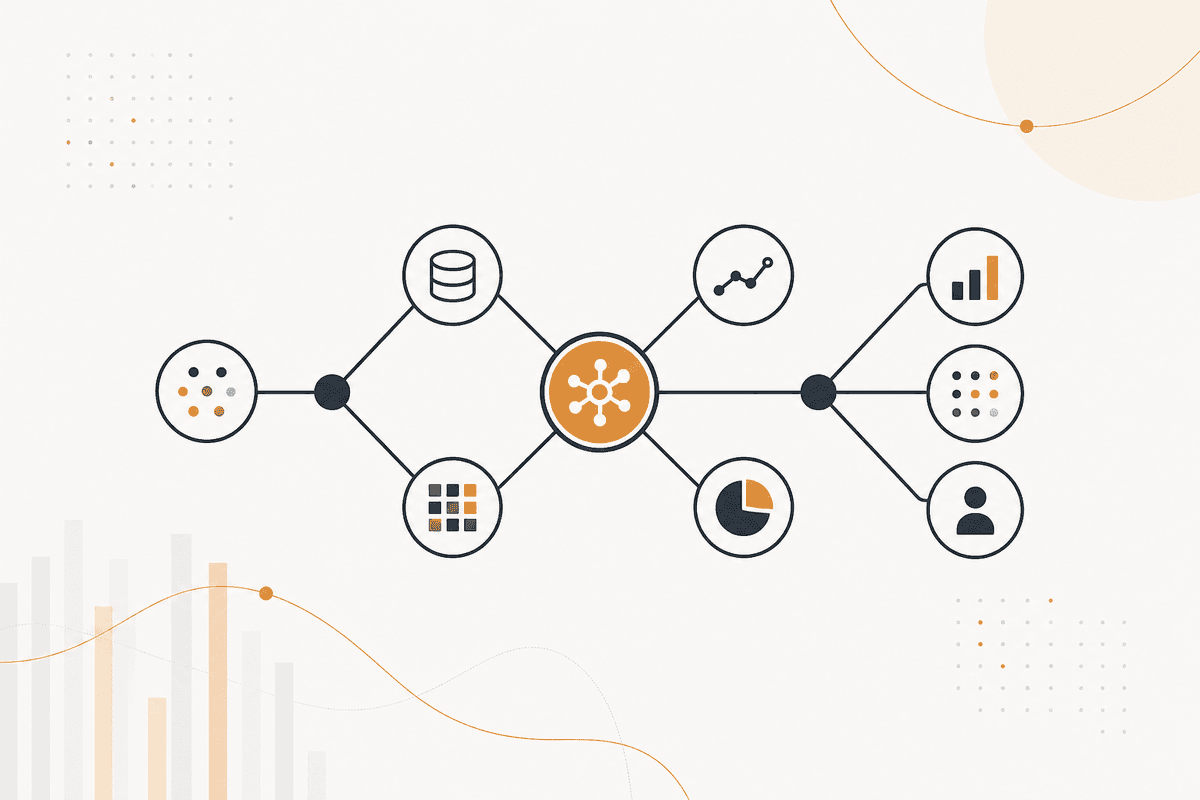
A flow supplies the material. A Google Sheets or PostgreSQL node holds the responses. A Filter node removes blanks. A Sentiment Analysis node scores each one. Agent Chat hands the set over.
Notion receives themes with counts, reasons, quotes, and segments. The low-frequency section sits at the same level as the main themes rather than in an appendix, because burying it would defeat the purpose.
Quotes are attributed to segments, not to named respondents.
What this agent is built from
- System prompt: a reason per group, segment attribution per finding, and a protected low-frequency section.
- Prompt skills: segment definitions and the themes already known, so new findings stand out.
- Sentiment Analysis (AI Custom): scores responses before grouping so a theme can be reported as mixed.
- Generate Object grouping: done by reading, which is why each group can explain itself.
- Agent Chat (Util): hands over the filtered response set.
- Notion (Integration): receives themes, quotes, and segments, with outliers at the same level.
- When an ActionFlow is enough: If you are counting multiple-choice answers, build the workflow. Reading the free text is the agent's job.
Frequently asked questions
Start building AI workflows
Create a free account, open a template or a blank canvas, and run your first ActionFlow.
Newsletter
Get product updates
New nodes, agents, and product notes. We send mail only when we have something worth opening.