The contract terms are in a document the ledger never sees
Revenue is recognized when the invoice is issued. The invoice itself rarely contains the terms that affect timing. Milestone clauses, delivery conditions, service periods, and cancellation rights sit in a contract PDF that the accounting system never sees.
Whether the entry matches the agreement is decided by reading both documents, and if that happens at all, it is done by sampling.
Exposure concentrates in non-standard deals. Every negotiated agreement has terms that differ from the standard template. Those are the contracts nobody reads again after signing.
The page presents a comparison. It does not make an accounting determination. Your accountants decide which treatment is appropriate under your reporting framework. The agent points out cases where the record and the contract appear to differ.
How the agent is built in Agent Studio
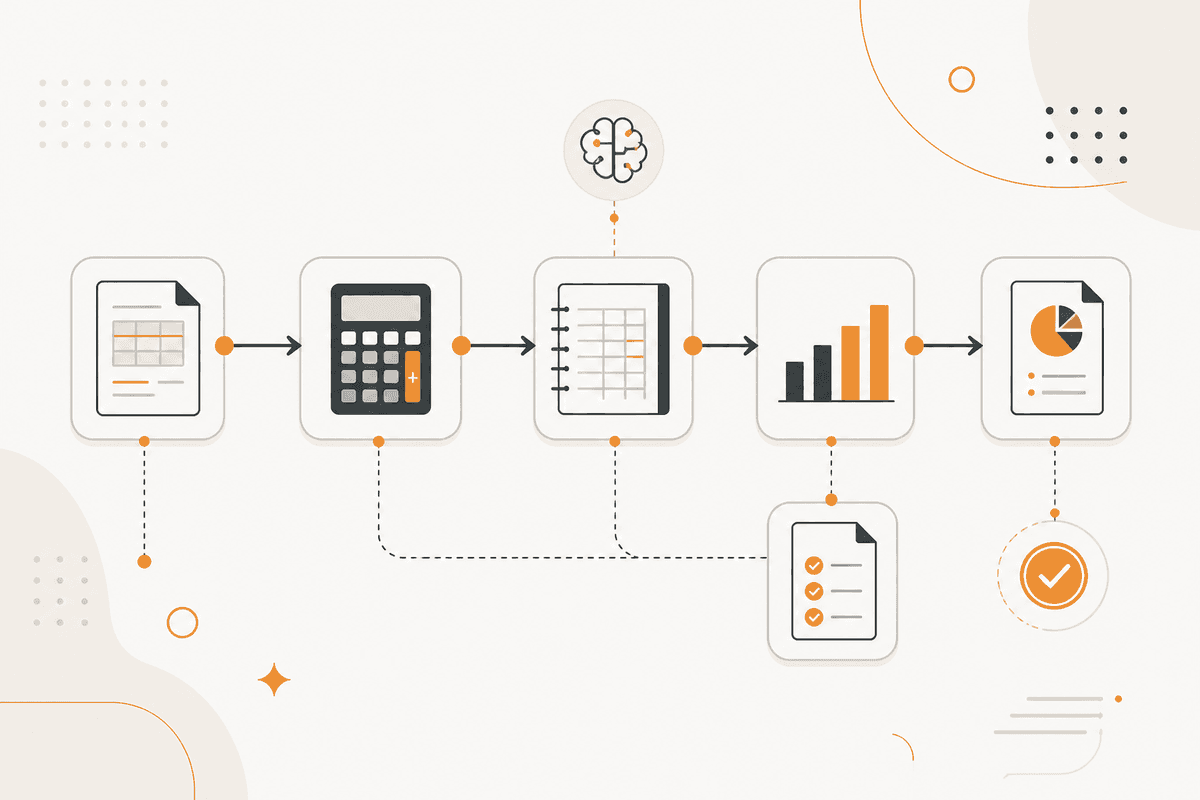
Contract terms are required first. A Document Upload node and a PDF4me node take the contract. A Generate Object node returns the revenue clauses as a structure.
The system prompt is intentionally limited. The agent compares the recorded treatment with the extracted terms and flags apparent inconsistencies. It never states what the correct treatment should be. That limit is explicit in the prompt.
Prompt skills hold your standard contract templates, so the only contracts that need a closer read are the ones that differ.
A PostgreSQL node supplies how the revenue was recorded. Agent Chat sees both sides.
Notion receives the findings: the contract clause, the recorded treatment, and the nature of the apparent difference.
Accountants or auditors decide. The agent prepares a review list. The benefit is that the list is based on all contracts rather than a sample.
What this agent is built from
- System prompt: compares and reports any apparent inconsistencies. Never states the correct treatment.
- Prompt skills: hold your standard contract templates, so deviations stand out.
- Document Upload (Data) plus PDF4me (Data): take the contract and extract its contents.
- Generate Object (AI Core): returns the revenue-relevant clauses as a structure before comparison.
- PostgreSQL (Data): supplies how the revenue was actually recorded.
- Notion (Integration): receives the clause, recorded treatment, and the nature of the difference.
- When an ActionFlow is enough: If you only need to flag contracts that deviate from your template, that alone narrows the set of contracts to review.
Frequently asked questions
Start building AI workflows
Create a free account, open a template or a blank canvas, and run your first ActionFlow.
Newsletter
Get product updates
New nodes, agents, and product notes. We send mail only when we have something worth opening.