A forecast without its assumptions is a number nobody can argue with
Forecasting capacity from a trend line is easy and usually wrong, because the trend encodes things that will not continue: a migration that inflated storage for two months, a customer onboarded in March, a job that ran twice until someone noticed.
A usable estimate states its assumptions. Growth continues at the observed rate. No new large customers arrive. The retention policy remains unchanged. Stated that way, the people who know an assumption is false can say so.
Identifying the constraint is a separate question from the trend. Systems rarely run out of the thing being measured. They run out of a connection limit, a quota, a license tier, or a maintenance window that no longer fits.
The agent produces the estimate with its assumptions and its uncertainty. It provisions nothing, resizes nothing, and the buying decision remains with the people who hold the budget.
How the agent is built in Agent Studio
Growth history is read from the systems. Prompt skills hold the events that distort it: migrations, onboardings, incidents, and policy changes, along with their dates.
A second prompt skill declares the real constraints per system: quotas, license tiers, and connection limits, because the metric being graphed is usually not the first thing to bind.
The system prompt requires every estimate to list its assumptions and provide a range rather than a date, because a single date is later quoted back as a commitment.
It forbids extrapolating through any period the prompt skills mark as distorted, and requires the agent to say when history is too short or too noisy to support an estimate at all.
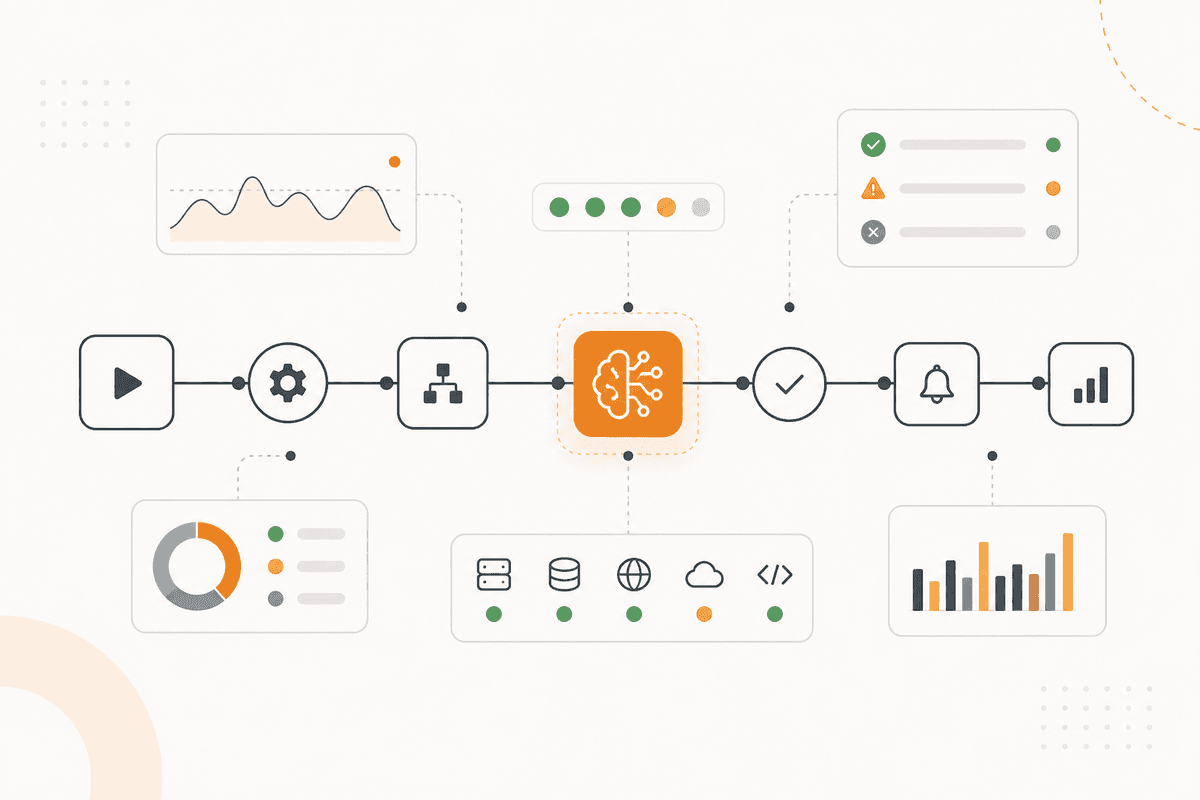
A Start Scheduled flow reads usage through an HTTP Request node, and a Math node computes resource-level trends before the Agent Chat node interprets them.
Google Sheets holds the figures. Google Docs holds the written estimate with its assumptions. A Slack node notifies the owner when a constraint enters your planning horizon.
Nothing is provisioned or purchased. A Human in the Loop node sits between the estimate and any capacity decision.
What this agent is built from
- Prompt skills: migrations, onboardings, and policy changes that distort the trend.
- Prompt skills: the real constraints per system, including quotas, tiers, and connection limits.
- System prompt: assumptions are listed, and a range rather than a date.
- System prompt: no extrapolation through distorted periods. Thin history is stated as such.
- HTTP Request (Util) with Math (Util): usage is read and trends are computed before interpretation.
- Google Docs (Integration): the estimate with its assumptions attached.
- When an ActionFlow is enough: If you need a weekly capacity and cost summary expressed as change, build the workflow. It catches the fast movers on its own.
Frequently asked questions
Start building AI workflows
Create a free account, open a template or a blank canvas, and run your first ActionFlow.
Newsletter
Get product updates
New nodes, agents, and product notes. We send mail only when we have something worth opening.