Most cost increases are explainable, and the explanation takes an hour to find
Bills move for reasons, and the reason is usually mundane: a launch, a backfill, a customer migration, a price change the provider announced in an email nobody read. The work is not detecting the increase. A threshold does that. The work is establishing which of those it was.
Detection alone produces alerts that everyone learns to dismiss, because four out of five are expected increases that nobody bothered to record anywhere.
The judgment is whether an increase is explained by something that happened. That means reaching into deploys, launches, customer events, and provider notices and comparing them against the specific resource whose cost changed.
The agent investigates and reports, explaining what it checked. It shuts nothing down and resizes nothing, because the cheapest-looking resource is sometimes the one holding the business together.
How the agent is built in Agent Studio
Spend data is read per resource rather than per account, because an account-level increase gives you a number, and a resource-level increase gives you somewhere to look.
Prompt skills hold your expected patterns: month-end batches, seasonal load, and the services that scale with customer count, so a predictable increase is recognized rather than reported.
A second prompt skill declares the sources the agent may check for explanations: deploy history, the launch calendar, customer events, and provider notices.
The system prompt requires that every explained verdict name the specific event and the resource it accounts for, and forbids reporting a partial explanation as a full one.
It also forbids any action against infrastructure. The agent cannot resize, stop, or delete, and that is stated rather than assumed.
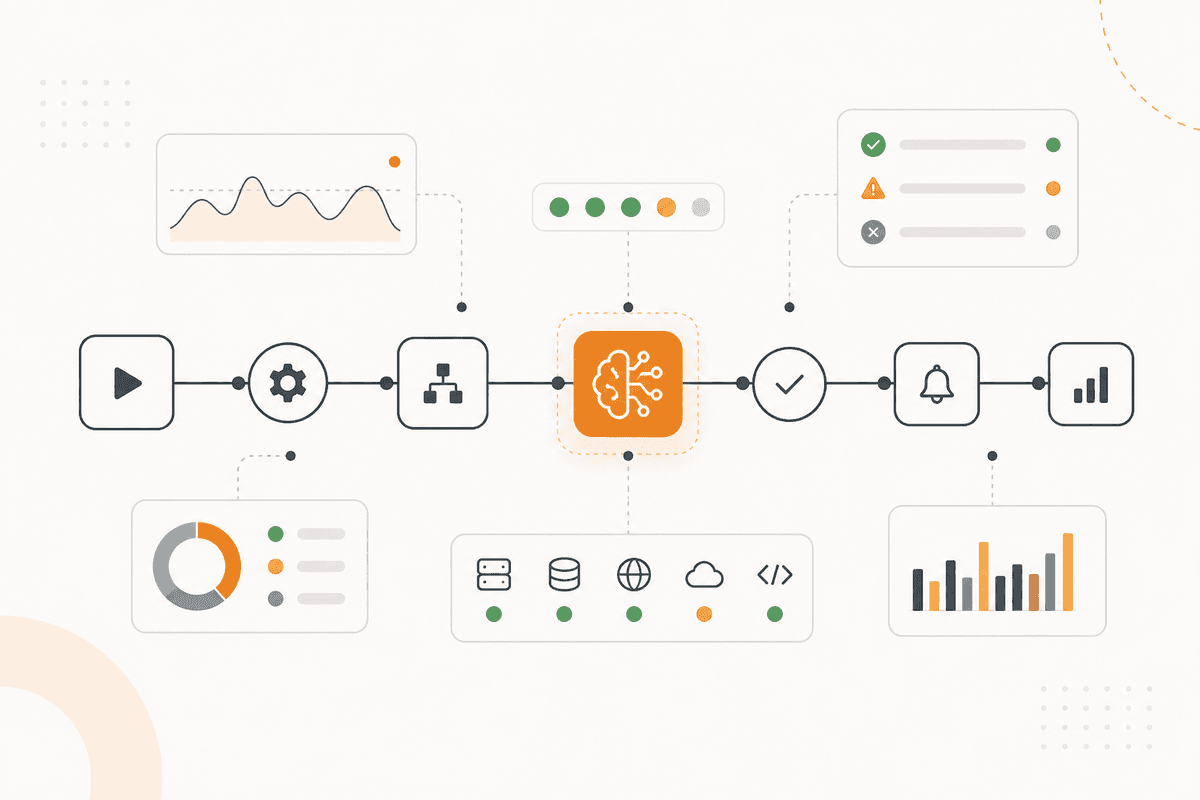
An HTTP Request node supplies billing and usage per resource. A Math node computes the deviation. The Agent Chat node investigates only what crossed your threshold.
Findings go to Slack for engineering and to Google Sheets for finance. A Human in the Loop node sits before anything that becomes a change.
What this agent is built from
- Prompt skills: expected patterns, including month-end batches, seasonal load, and customer-linked scaling.
- Prompt skills: the sources it may check include deploys, launches, customer events, and provider notices.
- System prompt: an explained verdict names the event and the resource it accounts for.
- System prompt: no partial explanation is reported as full. No action against infrastructure.
- HTTP Request (Util) with Math (Util): billing per resource, and the deviation from expectation.
- Agent Chat (Util): investigates only what crossed the threshold.
- When an ActionFlow is enough: If you report week-on-week change per service, build the workflow. It surfaces the increases worth investigating.
Frequently asked questions
Start building AI workflows
Create a free account, open a template or a blank canvas, and run your first ActionFlow.
Newsletter
Get product updates
New nodes, agents, and product notes. We send mail only when we have something worth opening.