Bad news about a vendor is usually not a risk to you
Vendor monitoring produces an endless stream of negative headlines, and almost none of them change anything. A missed funding round, an executive leaving, and a lawsuit in a jurisdiction you do not operate in fill a report and change no decision.
What matters is a signal touching your dependency: the region you deploy in, the service tier you buy, the component your system calls, the term your contract renews on.
Performance is the other half and is more reliable than news. A vendor whose response times have doubled over three months is telling you something no press release will.
The agent assesses both based on how much you actually depend on the vendor and escalates what is material. It changes no contract, cancels nothing, and starts no conversation with a vendor on its own.
How the agent is built in Agent Studio
Sources are declared in prompt skills, such as publications, filings, and status pages, so the agent reads from a defined set rather than whatever a search returns.
A second prompt skill records your actual dependency on each vendor: what you use, in which region, on which terms, and what switching would cost you.
The system prompt requires that every escalation explicitly connect a signal to that dependency. A negative item with no stated connection is logged, never escalated.
It requires performance data and news to be weighed separately and forbids a single risk score, because a score hides which of the two actually moved.
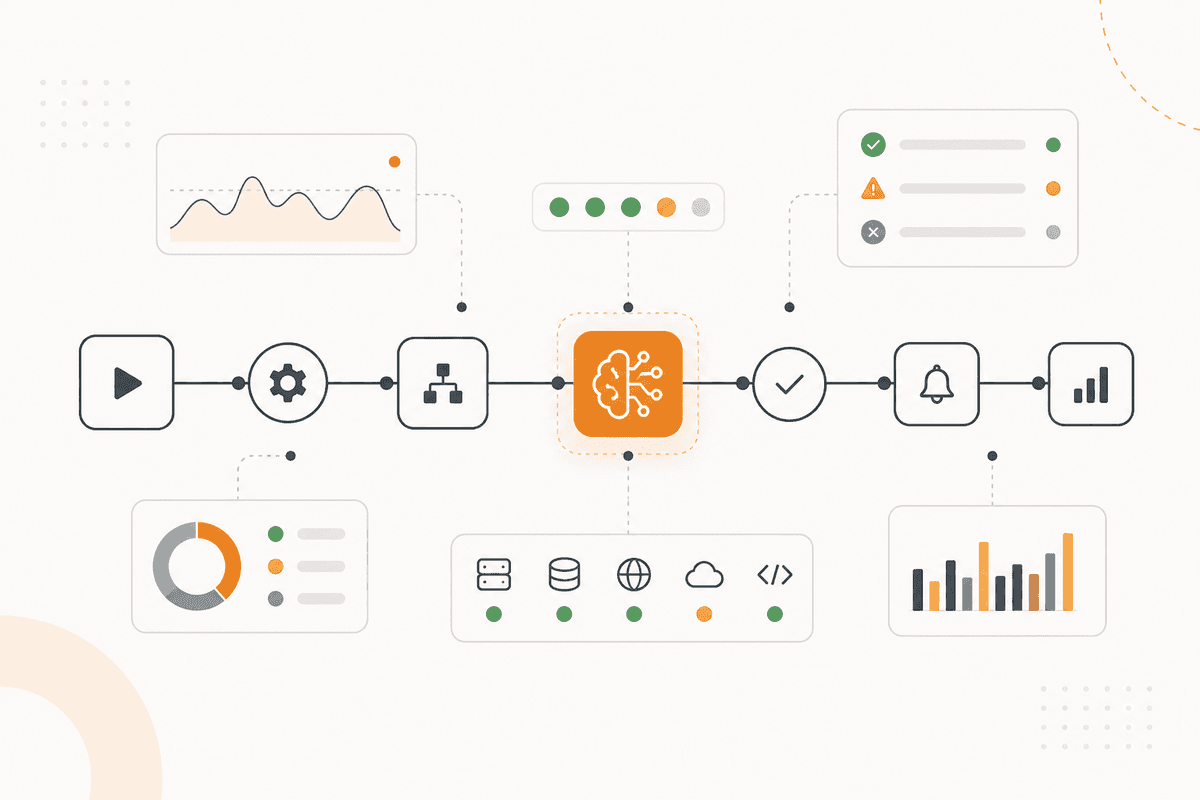
A Start Scheduled flow collects news through Scrappey and performance figures through an HTTP Request node. The Agent Chat node reads both, with the dependency record attached.
Airtable maintains the running vendor register and its assessment history, making renewal conversations evidence-based rather than anecdotal.
A Slack node delivers material findings to the relationship owner, and a Human in the Loop node sits before anything that becomes an action.
What this agent is built from
- Prompt skills: declared publications, filings, and status pages.
- Prompt skills: your real dependency per vendor, including switching costs.
- System prompt: every escalation connects a signal to that dependency.
- System prompt: news and performance are weighted separately. No single risk score is produced.
- Scrappey (Util) with HTTP Request (Util): declared sources and performance figures.
- Airtable (Integration): the vendor register with its assessment history.
- When an ActionFlow is enough: If you are tracking vendor status pages and notifying affected teams, build the workflow. It handles the operational half well.
Frequently asked questions
Start building AI workflows
Create a free account, open a template or a blank canvas, and run your first ActionFlow.
Newsletter
Get product updates
New nodes, agents, and product notes. We send mail only when we have something worth opening.