A low score is a symptom with several possible causes
A drop in satisfaction is blamed on the person who handled the tickets, because that is the attribution the data most readily supports. That attribution is often wrong, and it can harm a team.
The same drop could mean a real handling problem, a product failure, a policy that agents apply correctly but customers dislike, or a survey that hit at an unfortunate time.
To tell those causes apart, you have to look at the interactions and identify what the low-scoring ones have in common. That shared feature does not appear in any aggregated data.
Sample size matters more here than in almost any other situation. Five poor scores in a week generally count as a week. Treating them as a pattern leads to a performance discussion that should never have taken place.
How the agent is built in Agent Studio
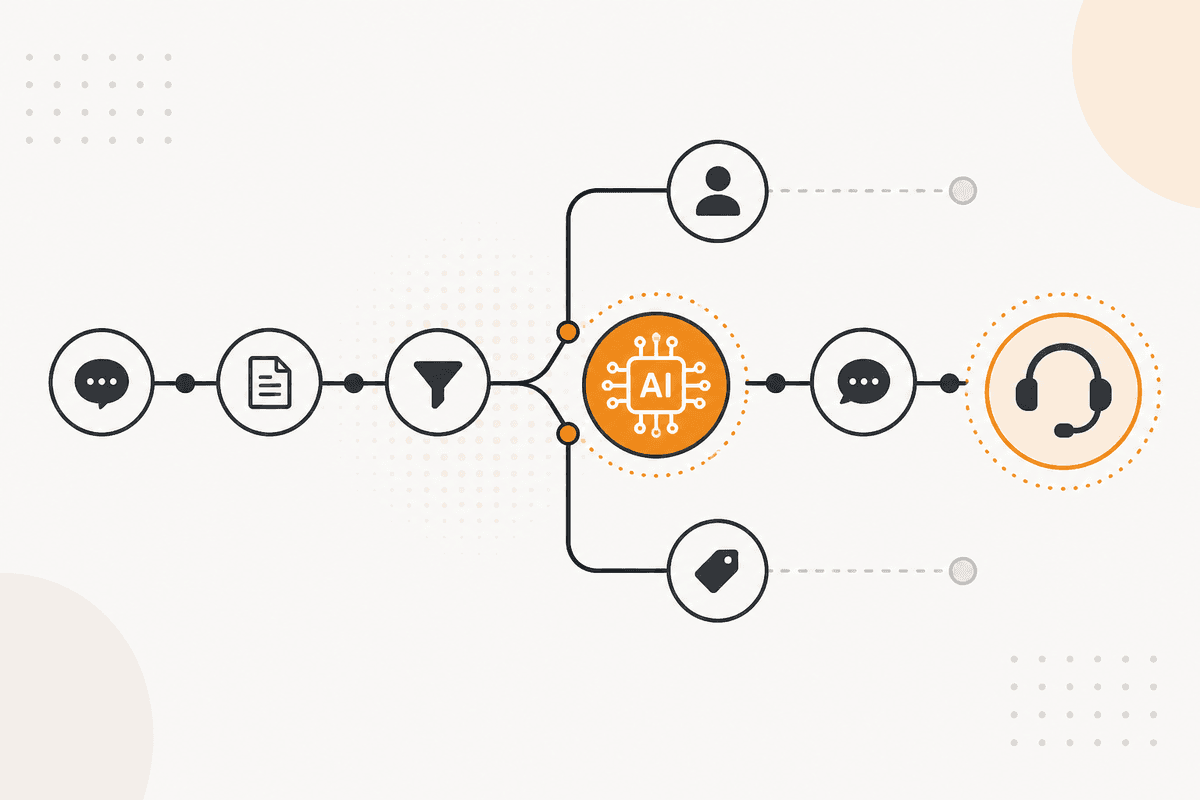
Low scores may be the starting point, but they are never the entire input. The flow provides the complete interaction, because an HTTP Request node retrieves the conversation text along with the score. A score without the conversation cannot be investigated.
The system prompt lists the four possible causes and instructs the agent to weigh all of them rather than picking the first one that seems plausible. It also sets a minimum number of interactions before any cause is stated.
Prompt skills set the standards you apply, so when you evaluate an agent's behavior you use the actual instructions you give to agents rather than a generic ideal.
Agent Chat hands off the low-scored set on a schedule. The findings, including example interactions for each cause, go to Notion.
When the cause is a product issue, a Linear node creates a routing-related issue, so the support team does not treat the product failure as a performance problem.
The names of individual agents are never included in the output. Patterns are reported at the team level. A manager then decides whether to look into an individual conversation.
What this agent is built from
- System prompt: four named candidate causes, weighed rather than picked, with a minimum sample.
- Prompt skills: your actual handling standards rather than a generic service ideal.
- HTTP Request (Util): pulls full conversation text alongside each score.
- Agent Chat (Util): a scheduled flow hands off the low-scored set.
- Notion (Integration): receives findings, with example interactions cited for each cause.
- Linear (Integration): receives product causes as tracked issues rather than support findings.
- When an ActionFlow is enough: If a score trend report is enough, build the workflow. Diagnosing the cause is the agent's job. Naming individuals is not.
Frequently asked questions
Start building AI workflows
Create a free account, open a template or a blank canvas, and run your first ActionFlow.
Newsletter
Get product updates
New nodes, agents, and product notes. We send mail only when we have something worth opening.