A patient finding out about a cost afterward is an avoidable failure
Coverage checks are done inconsistently, typically at the desk and in a hurry. The patient then learns of any excess or exclusion only when the bill arrives.
The conversation is much easier to have before the appointment, because the information needed is already known: what is covered, what the limits are, and how much the patient will have to pay. The front desk does not have enough time to put that together.
Turn the details into a simple checklist. Policy documents are written for adjusters. The impression a person gets from reading them differs from the coverage that actually applies to them.
The result is an administrative summary of the recorded coverage. It does not guarantee payment, and the page makes that clear. Treating the checklist as a guarantee is the problem it was designed to avoid.
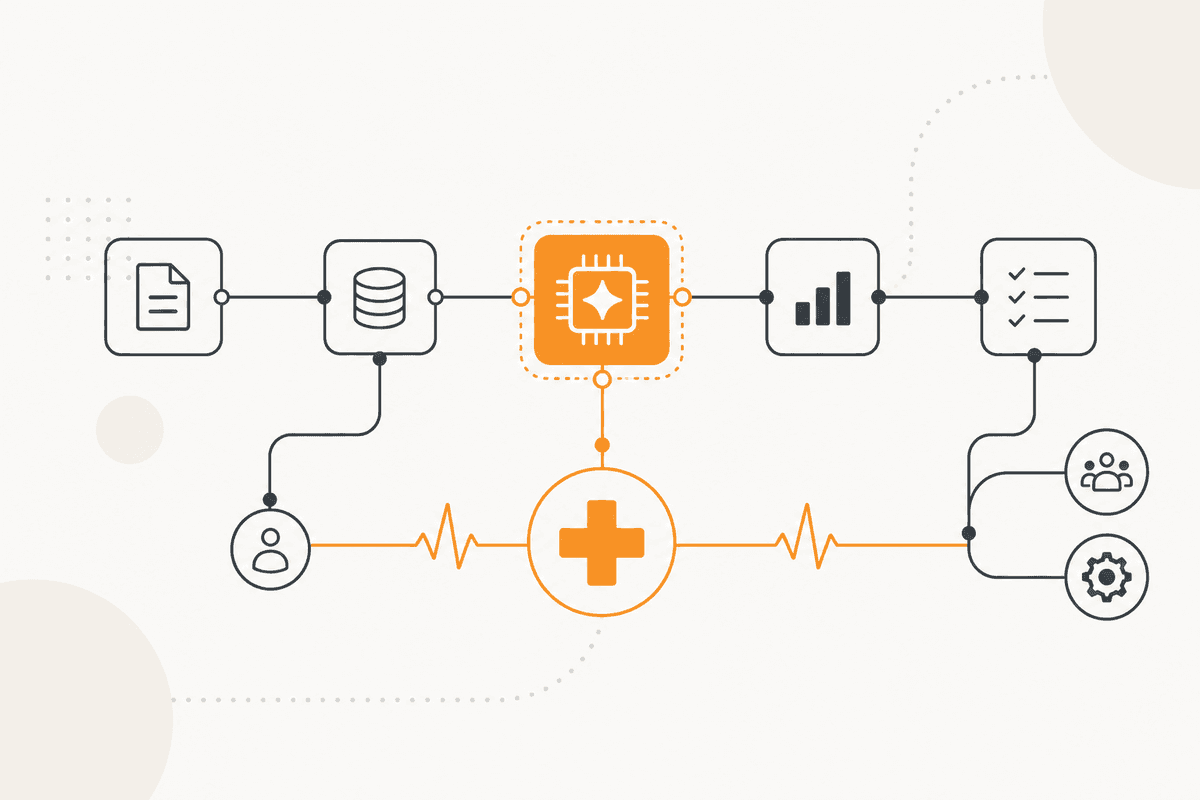
How the ActionFlow runs on the canvas
The timing choice is what makes the flow work. Instead of processing the request at the desk, the Start Scheduled node runs ahead of the appointment list.
If a payer eligibility service is available, the HTTP Request node queries it. A PostgreSQL node supplies the coverage details you already have.
The Generate Object node transforms the response into the fields relevant to this appointment type: covered, excess, limits, prior authorization needed, and exclusions related to the planned procedure. Each field includes the source field it came from.
A Filter node discards everything irrelevant to this appointment, because most of a policy, and all of the confusion, consists of those things.
The Generate Text node produces the patient-facing version in plain language. It includes a clear statement that it summarizes the recorded coverage and is not a guarantee of payment.
The Human in the Loop node sends any ambiguous case to the billing team instead of giving a patient an uncertain amount.
The Resend node sends the checklist before the appointment. The HTTP Request node then attaches it to the record so the desk can see exactly what the patient received.
Nodes this ActionFlow uses
- Start Scheduled: runs ahead of the appointment list rather than at the desk.
- HTTP Request (Util): queries the payer eligibility service where one exists.
- PostgreSQL (Data): supplies coverage details already held.
- Generate Object (AI Core): returns coverage fields with the source field behind each.
- Filter (Data): drops everything irrelevant to this appointment type.
- Generate Text (AI Core): writes the plain-language version with the not-a-guarantee statement.
- Slack (Human in the Loop): routes ambiguous coverage to billing rather than to the patient.
- Resend (Communication): sends the checklist before the appointment.
Frequently asked questions
Start building AI workflows
Create a free account, open a template or a blank canvas, and run your first ActionFlow.
Newsletter
Get product updates
New nodes, agents, and product notes. We send mail only when we have something worth opening.