Every organization has requests that two teams each believe belong to the other
Internal requests arrive described by the requester's problem rather than by your org chart. Someone needs access to a system, someone needs a device replaced, and someone needs a report they saw once. None of them know which team does which.
A routing form pushes that work onto the requester and still gets it wrong, because the categories were written by the teams rather than by the people asking.
The real difficulty is overlap. A laptop request during onboarding could come from IT or HR. An access request could come from IT or security. Every organization has three or four such cases where both teams reasonably believe it is the other's.
The agent decides those cases against the rules your teams agreed on in advance, states which rule it applied, and makes its reasoning visible, so the rule gets argued rather than the routing.
How the agent is built in Agent Studio
Ownership rules live in prompt skills, written as your teams agreed on them, including overlap cases and which team owns each one. Those owners are decided rather than inferred.
A second prompt skill holds the requests each team actually handles in their own words, which routes better than any category list ever does.
The system prompt requires that the applied rule be named in every routing, so an incorrect routing can be traced back to a rule and fixed once, rather than being argued about repeatedly.
It requires the agent to route rather than to hold. A request that cannot be placed is routed to a declared fallback owner because an unrouted request is worse than a misrouted one.
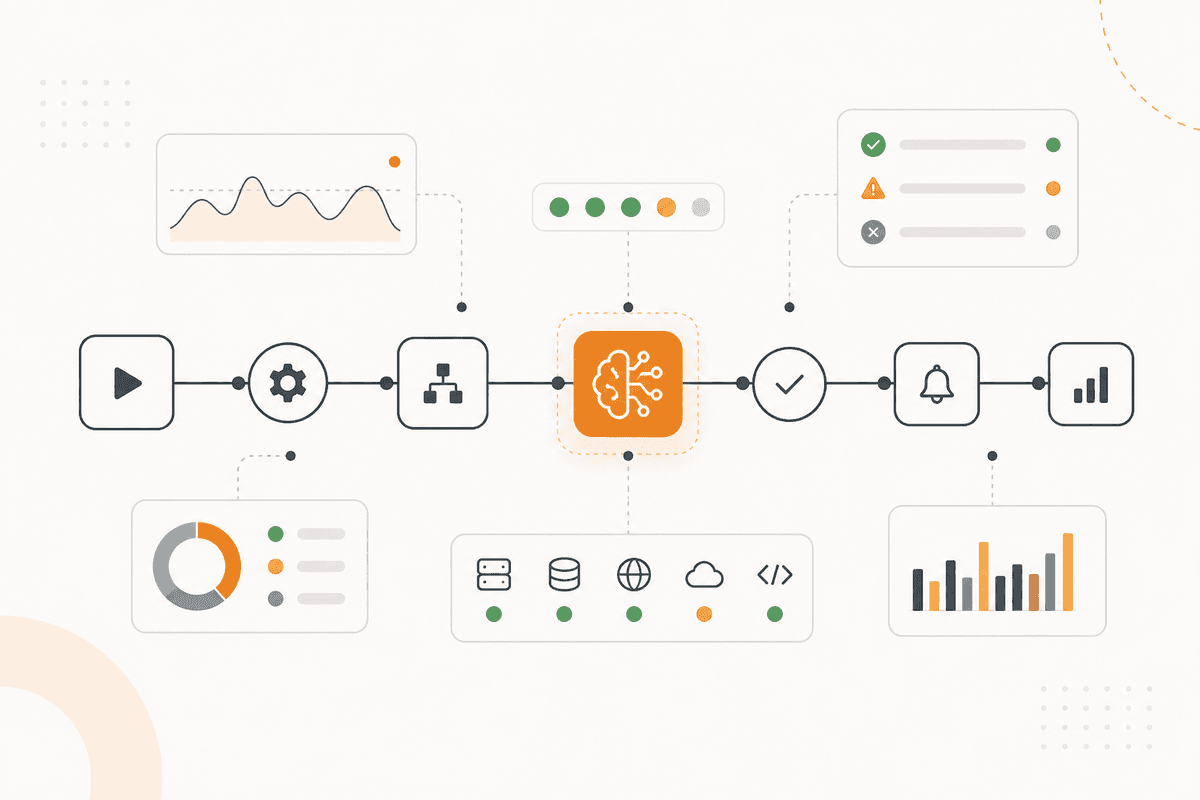
Requests arrive through a Slack or Email node. The Agent Chat node reads each one from an HTTP Request node, with the requester's role and location attached.
A Switch node delivers to the owning team's queue in Jira or Monday, carrying the request, the rule applied, and the requester's context.
The agent fulfills nothing. No access is granted. No purchase is made. Google Sheets logs every routing decision against where the request finally landed, exposing a rule that no longer matches reality.
What this agent is built from
- Prompt skills: ownership rules as your teams agreed on them, including any overlaps.
- Prompt skills: what each team handles, in that team's own words.
- System prompt: the applied rule is named in every routing.
- System prompt: routes rather than holds. An unplaceable request goes to a declared fallback.
- Slack (Communication) with HTTP Request (Util): the request, plus the requester's role and location.
- Switch (Control) with Jira (Integration): delivery to the owning queue with the rule attached.
- When an ActionFlow is enough: If the categories are genuinely distinct, routing by keyword to a team queue is a workflow.
Frequently asked questions
Start building AI workflows
Create a free account, open a template or a blank canvas, and run your first ActionFlow.
Newsletter
Get product updates
New nodes, agents, and product notes. We send mail only when we have something worth opening.