Ten failure emails in an inbox is not a status report
Overnight pipelines send their own notifications. The morning inbox is a dozen separate messages with no full overview. It takes ten minutes of reading to determine whether the current figures are reliable.
Not all failures matter equally. A job that failed and then succeeded is just noise. A silent failure that left the table only half full is why the report is wrong at nine.
A single failure can produce multiple problems. A job that succeeded on out-of-date input produced output that looked fine but was not. Only knowing the order makes that visible.
The summary answers one question first: whether the current figures can be trusted. The rest is detail for the person who is doing the repairs.
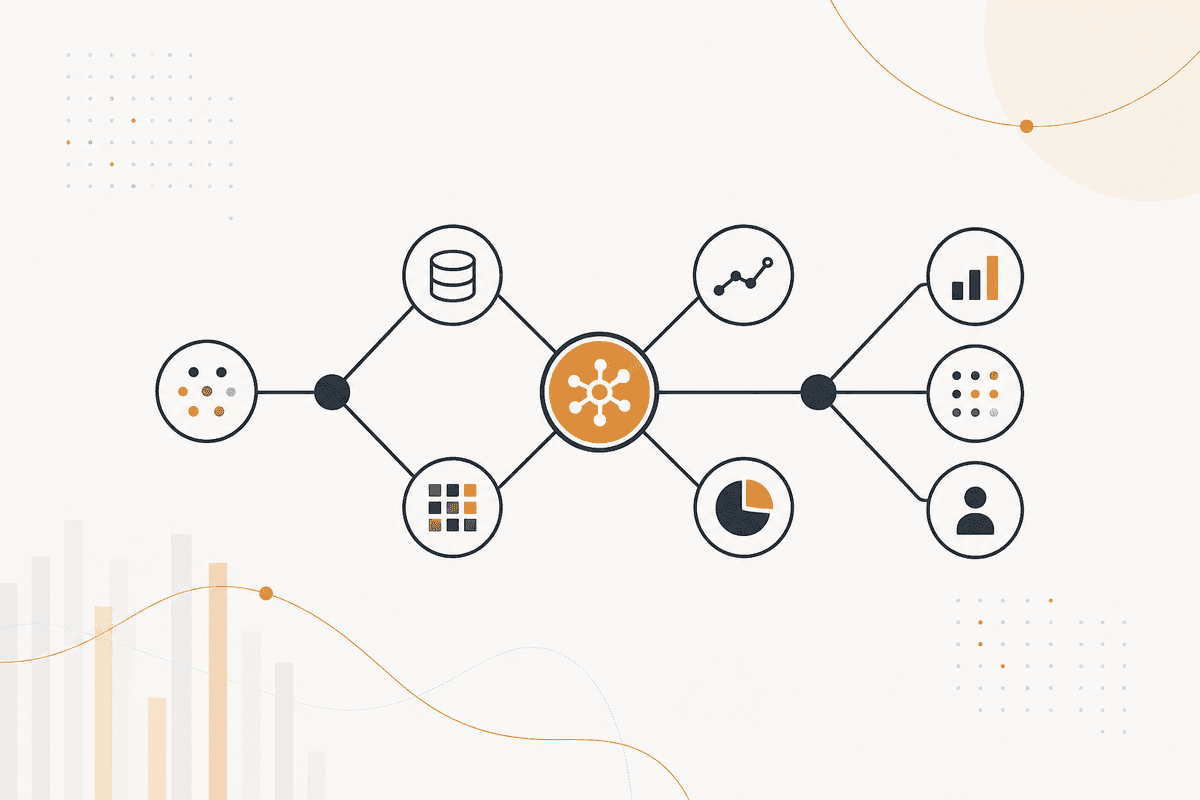
How the ActionFlow runs on the canvas
A Start Scheduled node runs before the working day and collects overnight job results. An HTTP Request node reads the job statuses. A PostgreSQL node checks the row counts in the tables that the jobs write to.
Row counts can detect silent failures. A job that reports success while writing only a fraction of its normal row count is a situation that a status field never shows.
A Google Sheets node holds the dependency map: which job feeds which other job. If an upstream job is late, a downstream job that later succeeds is unreliable.
A Generate Object node combines the statuses, the row counts, and the dependencies into a structured verdict. It identifies jobs that failed, jobs that succeeded on out-of-date input, and tables that should not be trusted today. It also returns a single overall confidence statement.
A Sort node puts anything that affects a business-facing report before the other items.
A Generate Text node writes the summary with the confidence statement as the first line. A Slack node posts it before people begin work.
A Linear or Jira node creates an issue for any failure that cannot be recovered automatically, so nobody has to remember the message.
Nodes this ActionFlow uses
- Start Scheduled: runs before the working day begins.
- HTTP Request (Util): reads overnight job statuses.
- PostgreSQL (Data): checks row counts, which catch a silent partial failure.
- Google Sheets (Integration): holds the dependency map between jobs.
- Generate Object (AI Core): returns failures, stale-input successes, untrusted tables, and one confidence statement.
- Sort (Data): puts anything affecting a business-facing report first.
- Slack (Communication): posts the summary with the confidence line first.
- Linear (Integration): opens an issue for unrecovered failures. Jira fits the same slot.
Frequently asked questions
Start building AI workflows
Create a free account, open a template or a blank canvas, and run your first ActionFlow.
Newsletter
Get product updates
New nodes, agents, and product notes. We send mail only when we have something worth opening.